Guide
How reliable is American Airlines? The DFW problem and the rest
American ran 74.7% on time from September 2025 to August 2026, rank 9 of 14. Most of the shortfall comes from one airport, one direction and one season.

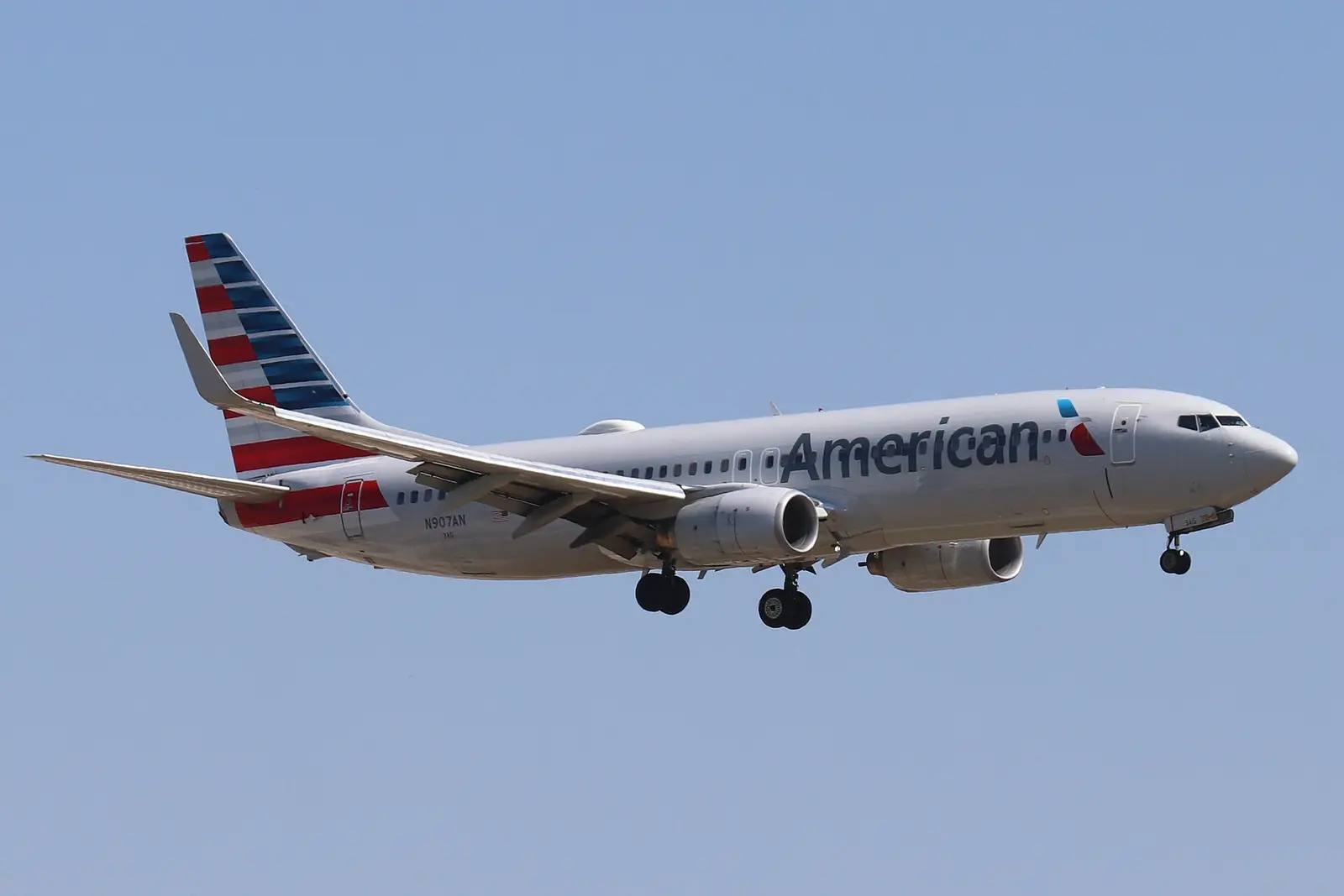
American Airlines ran 74.7% of its flights on time from September 2025 to August 2026, rank 9 of 14 US carriers and last of the three big networks. Delta ran 81.1% and United 78.8%. American also trailed both on cancellations (2.14%), on flights an hour or more late (10.2%, against 8.3% nationally) and on how long its late flights ran, an average of 85 minutes.
That reads like an airline-wide problem.
The detail says otherwise. Most of the gap sits at one hub, in one direction of travel and in one season, and a traveller who knows where it is can book around much of it.
Four measures
US average 8.3%
0.0%15.0%
Source: US DOT Bureau of Transportation Statistics, September 2025 to August 2026.
The long-delay measure is where American looks worst. 40.3% of its late flights ran an hour or more behind, against 36.6% nationally. When American is late, it is more often very late, and that is what breaks connections. The two American Eagle subsidiaries flying under its brand sit at opposite ends of the chart, a point covered below.
Dallas-Fort Worth
Among airports where one airline flies at least 30% of the departures, the weakest airline-at-hub record in the country belonged to American Airlines at Dallas-Fort Worth (DFW): 66.7% on time, against 74.7% for the airline's whole network. One American departure in six leaves Dallas-Fort Worth, so the hub drags the airline down with it. The airport as a whole ran 72.8%, rank 55 of 60.
US average 77.3%
55.0%90.0%
Source: US DOT Bureau of Transportation Statistics, September 2025 to August 2026.
The DFW problem has three features the data makes visible.
It is outbound. Flights leaving DFW on American ran about ten points worse than American flights arriving there, averaged across every route with its own page. Las Vegas to Dallas-Fort Worth is among American's best busy routes, and the route ran 79.9% on time; Dallas-Fort Worth to Las Vegas, flown largely by the same aircraft, ran 68.8%. DFW to Orlando ran 64.5% as a route and DFW to LaGuardia 66.1%. An inbound flight is judged at DFW's gate; an outbound one inherits every delay the hub has absorbed. The pipeline keeps the two directions of a route as separate records, and I think this is the clearest case in the data of why that matters: an average of the two would hide the whole DFW problem.
It is propagation. Late-arriving aircraft account for 47% of DFW's delay minutes and the air traffic system only 14%. DFW has seven runways and room to spare. The bottleneck is turning aircraft and crews through dense connecting banks, where one late feeder holds a departure and that departure's aircraft is late everywhere else for the rest of the day.
It is summer. DFW's worst month was June at 63.6%, and American's own DFW departures fell much further than the airport's did in June, July and August. North Texas thunderstorms build on summer afternoons and stop the ramp, because ground crews cannot work under lightning. The DFW June page and July page show those months in full. The Dallas and Houston guide covers the airport side.
Envoy and PSA, the carriers on the ticket
Envoy and PSA are American's own regional subsidiaries. They fly only as American Eagle, sell only through American and report their own DOT figures. Their records could hardly be more different.
Envoy ran 81.0% on time, rank 2 of 14, and at DFW its departures ran far better than American mainline's from the same airport. Envoy's DFW flying is mostly short hops to cities in Texas, Oklahoma, Louisiana and Arkansas, such as the Amarillo route. Envoy's cancellation rate, 2.19%, was the price: above the national 1.89%.
PSA ran 73.5% on time and cancelled 4.80% of its flights, near the top of a cancellation table that PSA Airlines led at 4.80%. Much of PSA's flying runs through Washington National, where its departures ran well below the airport average. National's slot limits and short runway mean a ground delay programme there removes flights outright, and the short regional sectors go first.
For a booking, "American" covers three records. The booking page shows "operated by" beside the flight number, and on routes from Charlotte and Washington that line is worth reading. The regional carriers guide explains who flies for whom.
Where American runs well
Away from DFW, American is an ordinary airline.
Phoenix is its best hub, and at Charlotte and Philadelphia it runs close to its network figure. Charlotte's inbound spokes are American's most reliable flying: flights from Denver, Pittsburgh, Baltimore and Detroit into Charlotte top its route list. The Pittsburgh to Charlotte route and the Baltimore to Charlotte route are typical.
O'Hare and Miami are the weak ones after DFW. At O'Hare, American mainline ran around ten points behind Envoy flying from the same airport.
The clock, the calendar and the week
Figures are on-time percentages. Darkest column is the best, lightest the worst. Source: US DOT Bureau of Transportation Statistics, September 2025 to August 2026.
American's best month was September at 79.1% and its worst July at 66.9%, with June at 69.9% and August at 71.5%. Its summer trough is deeper than the national one, which is DFW again. Winter was comparatively kind. One year is one sample, and a single stormy week at DFW can move a month by several points.
The on-time chart hides one winter detail. January 2026 had the year's highest national cancellation rate, and the cancellations were concentrated at Charlotte, Dallas-Fort Worth and Washington National, three American hubs, rather than in the snow belt. The on-time rate counts only flights that operated, so a month can look calm on this chart while cancellations run high.
By hour, American ran 88.3% on time between 5am and 8am and 64.5% between 5pm and 8pm, a gap of 23.8 points against 21.3 nationally. Sunday was its worst day at 69.1%, and Tuesday its best at 79.7%.
Late-arriving aircraft make up 47% of American's delay minutes, against 40% nationally. That is the same propagation signature as DFW, at network scale.
The most and least reliable American flight numbers
The best American flight numbers leave early and fly into a hub. AA 1903, the 6am from Raleigh-Durham to Charlotte, AA 2728, the 6am from Newark to DFW, and AA 2642, a morning Palm Beach to Philadelphia, are among the most punctual in American's schedule. The overnight flights from Hawaii to Phoenix, such as AA 664 from Kona, also score well.
The worst leave DFW in the late afternoon or evening. AA 2186, the 6:20pm to Orlando, AA 1322 and AA 577 to Denver, and AA 2628, the 9:30pm to Omaha, sit at the bottom.
If it were my American ticket
Connect at Charlotte or Phoenix, not DFW, when the fare is similar. If you must use DFW, connect in the morning.
Avoid late-day DFW departures in summer. Between June and August an afternoon or evening American departure from DFW is among the least reliable things the airline sells. I would not put a connection behind one.
Read the operator line. An Envoy flight out of DFW is a better bet than American mainline from the same gate area; a PSA flight out of Washington National is the riskiest option on the ticket.
Leave slack after an American connection. With 40.3% of late flights running an hour or more behind, I treat a 45-minute connection on American as a gamble rather than a plan. The connection risk tool prices it for the specific airport.
American's record in detail: American Airlines · American at DFW · American at Charlotte · Envoy · PSA · The big three compared