Guide
Hurricane season flying: what August to October 2025 showed
Tampa ran 87.1% on time in September 2025, one of its best months. Florida, Gulf and Carolina airports cancelled little that autumn, and a real hurricane looks very different.

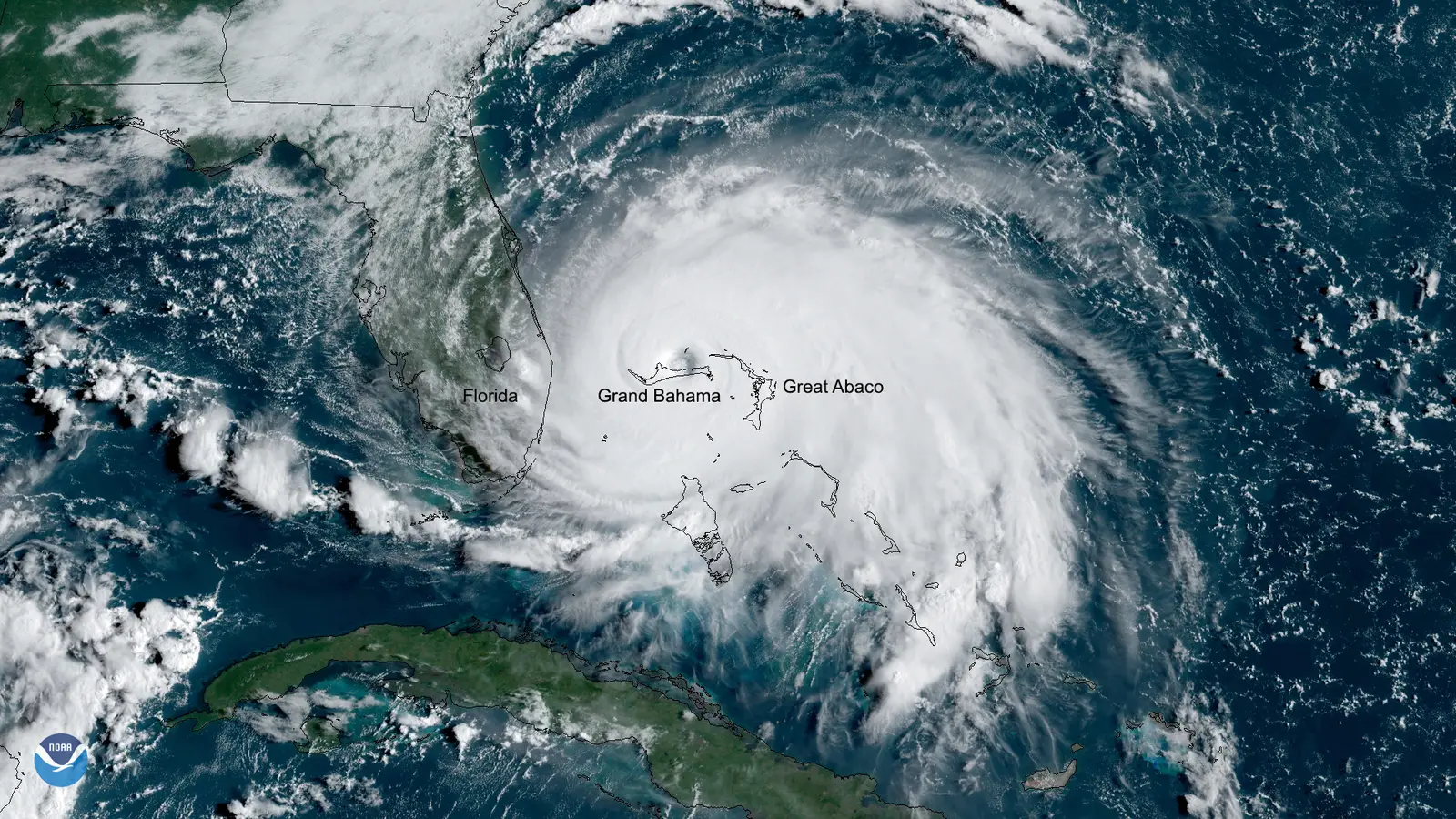
The Atlantic hurricane season runs from 1 June to 30 November, and its peak falls between August and October. Those are the months Florida, Gulf coast and Carolina travellers worry about. In this data they are August, September and October 2025, and at the airports most exposed to hurricanes they were some of the calmest months of the year.
Tampa in September 2025 ran 87.1% on time against 78.2% across the year and cancelled almost nothing. Fort Myers in September ran 88.2%. San Juan did not cancel a single scheduled departure in September 2025. The data shows no hurricane in the autumn of 2025, which is consistent with a season in which no hurricane made landfall on the US mainland.
One quiet season is one sample, not a forecast, and I would not plan a trip on it alone. This guide sets out what that autumn looked like, what a real hurricane looks like in the same data, and how to book around the risk.
August to October 2025, airport by airport
AugustSeptember
60.0%95.0%
Figures are on-time percentages. Source: US DOT Bureau of Transportation Statistics, September 2025 to August 2026.
Every airport in the chart improved from August to September, four of them by more than ten points. August was the weak month, and its problem was not tropical. Orlando in August ran 68.3% and Miami in August 73.4%, both near the bottom of the national table, but neither cancelled more than about one flight in a hundred. That is the signature of afternoon thunderstorms at the height of summer demand: flights run late, almost none are cancelled. The summer thunderstorm guide covers that mechanism; Florida's version of it lasts longer into the autumn than most.
September was the best month of the year nationally, and the coast shared in it. Orlando in September ran 84.6%, Houston Intercontinental in September 85.6%, and New Orleans in September 85.9%. No airport in the chart cancelled more than about half of one per cent of its September departures. Miami is the interesting exception on one measure: close to a quarter of its September delay minutes were coded to extreme weather, against 6% across the year. Its flights still ran 78.6% on time and it cancelled very few. Rain delays, not closures.
That distinction is the whole story of hurricane season in this data.
October eased back towards normal without any spike. Charleston in October ran 79.5% and Raleigh-Durham in October 79.0%, each with cancellation rates a fraction of their annual averages.
Tampa (TPA)78.2% overall
Miami (MIA)74.2% overall
New Orleans (MSY)78.0% overall
Charleston (CHS)78.9% overall
All panels share one scale, 55% to 90% on time. Source: US DOT Bureau of Transportation Statistics, September 2025 to August 2026.
Each of these four airports had its worst month of the year in July 2026. Not one had its worst month between August and October.
What a hurricane looks like in the data
The site's holiday records reach back to 2023, and two of them caught hurricanes at Tampa.
The weeks around Labor Day 2023 include the end of August 2023, when Hurricane Idalia passed Tampa Bay. Tampa cancelled more than eight per cent of its flights over those weeks, against a fraction of one per cent in a normal fortnight. The weeks around Columbus Day 2024 include late September and early October 2024, when Hurricanes Helene and Milton hit the Gulf coast of Florida. Tampa cancelled close to twelve per cent of its flights across those weeks and nearly nine per cent over the holiday weekend itself, and Orlando around seven per cent.
The on-time rate barely moved in either case. Tampa's flights that did operate ran above 85% on time in the weeks around Columbus Day 2024, and above 80% around Labor Day 2023. A hurricane does not make flights late: it removes them. The on-time rate also leaves out diverted flights, and in the DOT file a flight that turns back to its departure airport counts as a diversion, so the flights that tried and failed to get in never reach the punctuality figure either. Airlines cancel the schedule in advance, the airport closes for a day or two, and then operations resume at normal punctuality while the rebooking queue clears. That is the same distortion the cancellation rate guide describes for winter storms, in a more extreme form.
It also means a monthly figure dilutes a hurricane. A two-day closure removes around seven per cent of a month's flights at one airport. A monthly cancellation rate of three or four per cent at a Florida airport in September or October is worth investigating; in 2025 none came close. When I read a hurricane-coast airport, I look at the cancellation column first and the on-time rate second.
US average 1.89%
0.00%3.00%
Source: US DOT Bureau of Transportation Statistics, September 2025 to August 2026.
The annual cancellation rates in that chart were set almost entirely outside hurricane season in this data. At Fort Lauderdale and Palm Beach, the highest in the group, the heaviest cancellation months were January to March 2026 and July 2026, when storms elsewhere likely grounded the aircraft that fly the Florida routes; the February guide covers that connection. Neither airport's worst cancellation month fell between August and October.
The airlines and routes that carry the risk
When a storm threatens, every carrier at the affected airport cancels, so the choice of airline does not protect a trip the way it can on an ordinary day. The choice of route does matter, because the rebooking capacity after a storm depends on how many flights a day the route has and how many airlines fly it.
Two kinds of route dominate the hurricane coast's schedules: short hops to Atlanta and longer flights to the Northeast. Tampa to Atlanta ran 89.1% on time in September 2025, and New Orleans to Atlanta 94.1%, with Delta flying most of the seats on both and three or four other airlines alongside it. American at Miami and Southwest at Tampa are the biggest airline operations at those two airports. The long routes to the Northeast are exposed to weather at both ends: Orlando to Newark fell from 83.7% in September to 68.5% in October 2025. For the Caribbean, JetBlue at San Juan is the biggest operator and San Juan to Orlando the busiest route.
How I would book August to October
Do not avoid the season on the averages. In this data September and October ran better than the Florida winter peak, and August's problem was thunderstorms rather than hurricanes. The risk is real but concentrated in a few days, in some years, at a few airports.
Buy flexibility before a storm has a name. Airlines publish travel waivers once a storm threatens, allowing free changes, but insurance bought after a storm is named usually excludes it. A refundable fare, or insurance bought at booking, is the defence.
Fly early in the day, and early in the trip. August delays in Florida are afternoon thunderstorms. A morning departure avoids most of them, and an early return leaves room if a storm appears in the forecast.
Keep a spare day before anything fixed. This is the rule I would hold to even in a quiet year. A cruise sailing from Port Canaveral, Port Everglades or PortMiami, a wedding or a connection to an international flight should not depend on a same-day arrival. The South Florida guide covers the airport choice there.
Choose the route with the most daily flights. After a closure, frequency is recovery capacity. Check the route page before booking, and use the connection risk tool if the trip connects.
Hurricane-season airports: Tampa (TPA) · Miami (MIA) · Orlando (MCO) · New Orleans (MSY) · Houston (IAH) · Charleston (CHS) · San Juan (SJU)