Guide
Summer thunderstorms: why afternoon flying breaks down from June to August
Convective weather is the one delay cause that runs on a daily clock. It builds through the afternoon, peaks between 3pm and 8pm, and does it again tomorrow.

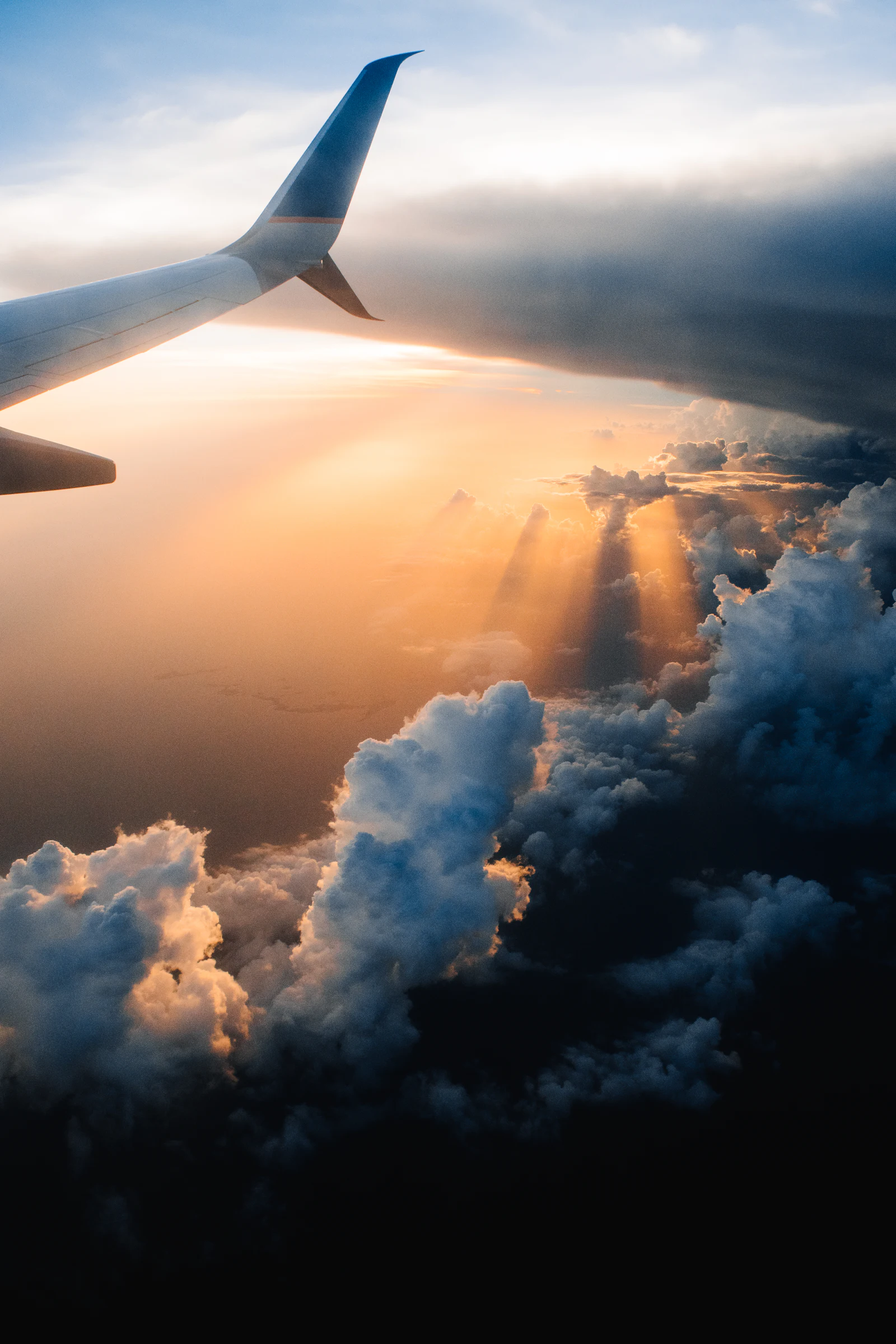
Convective weather is the only major delay cause with a reliable daily schedule. Thunderstorms over the Southeast, Texas and the Midwest form as the surface heats, mature in the late afternoon, and decay after sunset. They do it again the next day, and the next, for most of the summer.
That predictability is unusual and useful. Most delay causes are either structural, like airspace congestion, or random, like a maintenance problem.
This one keeps a timetable.
Why it costs more than the weather category suggests
Nationally, extreme weather accounts for 6% of reported delay minutes. That figure badly understates summer convection, for a reason worth understanding.
When a line of storms crosses an arrival corridor, the airport usually keeps operating at a reduced rate rather than closing. Those delays are filed under the National Airspace System category, which nationally carries 21% of delay minutes, not under extreme weather. Only genuinely unflyable conditions land in the weather bucket.
So the honest reading is that a substantial share of the NAS category in June, July and August is convection in disguise, and the two together account for most of what goes wrong on a summer afternoon.
The daily curve steepens
Nationally the 5am–8am window runs 89.3% on time against 68.0% for 5pm–8pm, a spread of 21.3 points across the whole year.
In convective season that spread widens, because the storms land squarely on the weakest window. The morning advantage that exists year-round is at its largest exactly when most people take summer holidays. July was the weakest month nationally in this data, at 71.7% on time.
There is a second-order effect too. Once an afternoon of storms has disrupted aircraft positioning, the evening inherits it. Late departures in summer are absorbing both the direct weather delay and the accumulated late-aircraft delay, which nationally is already the largest single category at 40% of minutes.
What I do between June and August
Fly in the morning. Between roughly May and September this is the strongest single piece of advice I can give from this data. A 7am departure is usually airborne before the atmosphere has done anything.
Do not connect in the afternoon through a convective hub. A midday connection in Dallas, Atlanta or Chicago in July is a bet against the clock. With Dallas-Fort Worth in July at 66.2% on time, I would not book an afternoon connection there. If the itinerary must connect, connect early.
Give connections ninety minutes rather than sixty in these months. Nationally 8.3% of arrivals land an hour or more late; in summer afternoons that share is materially higher.
Expect the delay to be short but common. Summer disruption is a frequent forty-minute problem rather than an occasional catastrophic one, which is the opposite of winter. Plan for friction rather than for stranding.
Where it does not apply
The Pacific coast produces almost no summer convection. Southern California, the Bay Area and the Pacific Northwest are largely exempt from this afternoon pattern.
That does not make their summers good in this data. Los Angeles in July ran 73.7% against 79.5% for its year, and Seattle in July 71.8% against 79.5%. San Francisco is the extreme case: from April to July 2026, several routes into SFO ran roughly 35 to 50% on time. It looked like a bug in my aggregation at first; checked against the raw month files, it is in the data. The data does not say why, and it is not a thunderstorm pattern.
The Rocky Mountain airports have their own version, driven by terrain rather than heat, on a similar afternoon clock.
Read the twelve-month strip on the specific airport's page rather than assuming the national pattern applies. In this case the geography matters more than the calendar.
What actually happens on the ground
Understanding the mechanism makes the advice easier to apply, because the announcements you hear at the gate use terms that sound interchangeable and are not.
A ground delay program is issued when an airport's arrival capacity drops below demand. Departures bound for that airport are held at their origin and given a controlled departure time, so aircraft wait at a gate rather than burning fuel in a holding pattern. This is why your flight can be delayed for weather at an airport a thousand miles away under a clear sky.
A ground stop is the harder version: departures for the affected airport stop entirely until further notice. These are usually short, and they usually resolve into a ground delay program rather than a cancellation.
Neither is the airline's decision, which is why every carrier at the airport is affected at once and why switching airlines does not help. Both land in the National Airspace System category, nationally 21% of delay minutes, rather than in the weather one.
The regional picture
Convection is not evenly distributed, and the difference is large enough to affect routing.
The Southeast and the Gulf coast produce near-daily afternoon storms through the summer, driven by heat and humidity. Texas and the southern Plains produce fewer but more severe events. The upper Midwest sits between the two patterns. The Northeast corridor gets its convection from systems moving through rather than from local heating, which makes it less predictable by time of day but less frequent overall.
The practical consequence for a summer itinerary is that connecting hub choice matters as much in July as it does in January, for a completely different reason. A midday connection through a Gulf coast hub in August is a bet against a near-certainty; the same connection at eight in the morning is a reasonable one.
A last point on expectations. Summer disruption strands fewer people than winter does. Nationally 1.89% of flights are cancelled across the year; July 2026 ran above that, concentrated at O'Hare and the New York, Washington and Boston airports, as the July guide shows, but January 2026 cancelled far more, and most storms delay flights rather than removing them. Plan for arriving late and missing a tight connection, not for sleeping at the airport, and set the connection buffer accordingly rather than avoiding the season.
Check a convective hub's summer profile: Dallas/Fort Worth (DFW) · Atlanta (ATL) · Denver (DEN)