Guide
Thanksgiving flying: what the data says about the busiest week in US aviation
Thanksgiving delays are not unusually bad. What is unusual is the cost of landing in the wrong tail of them, because there is no spare seat anywhere in the system.

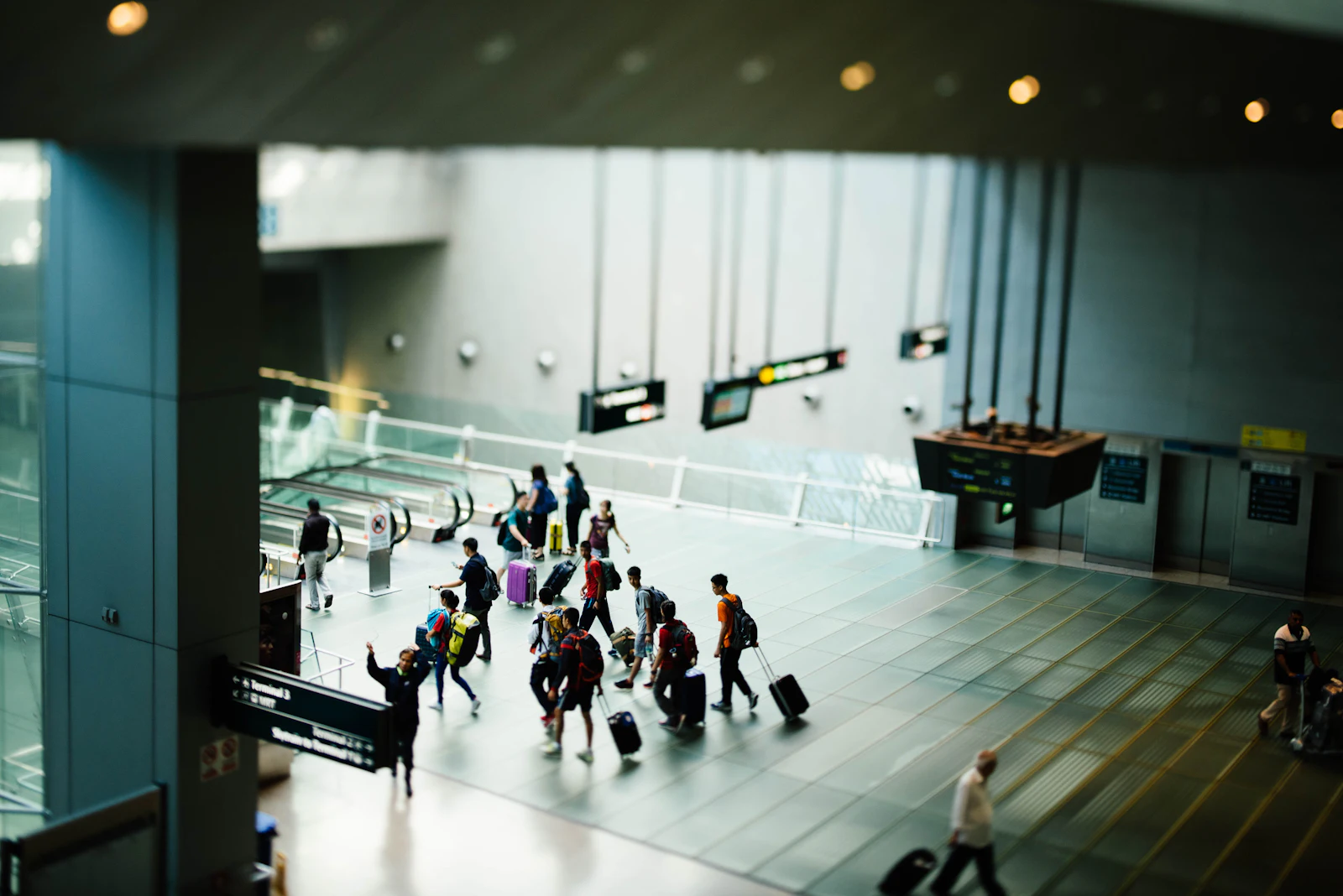
The received wisdom is that Thanksgiving is the worst time to fly in America. The DOT figures do not really support that, and the reason the week is genuinely difficult is more specific and more useful than "it is busy".
November is not a bad month nationally. Late autumn is one of the stronger stretches in the year: summer convection has finished, winter storms have not started, and the September figure of 83.4% sits at the top of the calendar. The Thanksgiving week itself does not usually break the monthly average.
The three weeks on record bear that out. The 2025 Thanksgiving week, the Saturday before to the Sunday after, ran 77.8% on time against 76.3% in the normal weeks either side, 1.5 points better. It cancelled 1.74% of flights against 2.09%.
During the holidayNormal weeks either side
70.0%90.0%
All US flights. Normal weeks are the two weeks either side of the window, excluding other holidays. Source: US DOT Bureau of Transportation Statistics, September 2025 to August 2026.
What changes is not the probability.
It is the consequence.
The system runs with no slack for six days
Airlines add capacity for the holiday, but not enough to create spare seats. Load factors run near maximum across the entire network for roughly six days, from the Tuesday before to the Monday after.
On an ordinary Wednesday, a cancelled flight means a seat on the next departure three hours later. During Thanksgiving week, it means the airline is looking for one empty seat somewhere in a network that has none. That is the difference, and it is the whole story.
Nationally 1.89% of flights are cancelled and 8.3% arrive an hour or more late. Those figures do not spike dramatically for the holiday. What spikes is the number of hours it takes to recover from either.
The days are not equal
The heaviest departure days are the Tuesday and Wednesday before, and the Sunday after. The Sunday is the worst of the three for a specific reason: it combines maximum demand with the accumulated position of every aircraft after a disrupted week.
Lining the three years up day by day, the Sunday after is the pattern I trust most. It was the least punctual day of the window in 2023, in 2024 and in 2025. In 2025 it was far worse than that: the Saturday after cancelled more than one flight in twelve, and on the Sunday only about half of the flights that did operate arrived on time. The data records the collapse, not its cause. A respectable average for the week hid the two worst days of the holiday, and both fell on the return.
Thanksgiving Day itself was the best day of the window in all three years, on little more than half the usual number of flights. Airports are empty, and the operation runs with unusual slack. If your schedule tolerates arriving on the day, it is the best trade available in the entire holiday period.
The Monday and Tuesday after are similarly quiet compared with the Sunday.
What I would do for Thanksgiving
Fly on the unpopular day. Thanksgiving morning, or the Monday after rather than the Sunday. This is worth more than every other adjustment combined. On three years of evidence, I would not book a Sunday-after return with anything important on the Monday morning.
Take the first departure. Nationally the 5am–8am window runs 89.3% on time against 68.0% for 5pm–8pm. During a week with no recovery capacity, a cancelled early flight still leaves a day of alternatives behind it. A cancelled evening flight leaves a hotel.
Fly non-stop, and pay for it. A connection during Thanksgiving week is two chances to be stranded in a system with nowhere to put you. This is the week where the fare difference for a non-stop is most clearly worth it.
Avoid the weather-exposed connecting hubs. If you must connect, route through a field with a lighter winter profile rather than one that shuts down when a system crosses. The airport pages here carry each hub's own monthly strip.
Carry on. Baggage systems run at capacity too, and a bag that misses your flight during this week rejoins you slowly.
What no amount of planning fixes
A winter storm crossing a major hub during the holiday will produce a multi-day backlog, because there is no spare capacity to absorb the rebooking. That is not a delay problem, it is a queueing problem, and it is why the advice above is about reducing exposure rather than avoiding risk.
Build a spare day into anything that genuinely cannot slip. The data can move your odds; it cannot make the system elastic.
Which hubs are risky in late November
The holiday sits at the boundary of the seasons, which makes the connecting hub an unusually consequential choice that week.
Late November can produce the year's first significant winter system across the northern tier, and it can equally pass without one. That uncertainty is the problem: you are booking weeks ahead, into a week with no spare capacity, through a hub whose weather is genuinely unpredictable at that date.
The southern connecting hubs carry materially less of that risk. A routing through the Sun Belt in late November trades a slightly longer flight for a much smaller chance of the one outcome that ruins the trip. Each airport page here carries its own twelve-month strip, and the November figure is the one to compare.
What the airline owes you if it goes wrong
Worth knowing before you need it rather than at a service desk with two hundred people behind you.
A cancelled flight entitles you to an automatic refund to your original payment method if you choose not to travel, whatever the fare type. That is a legal requirement, not a courtesy, and a voucher is not a substitute unless you accept one. The same applies to a delay of three hours or more on a domestic flight.
What no rule requires is a hotel, a meal, or rebooking on a competing airline. Those come from each carrier's own published customer service commitment, they differ meaningfully between airlines, and they are binding once published. Reading yours before booking takes fifteen minutes and is the single most useful preparation for a holiday trip.
The passenger rights guide sets out the full picture, including the thresholds and the timeframes.
Check your route before booking: Chicago O'Hare (ORD) · Denver (DEN) · Compare any US route