Guide
Red-eye flights: the overnight numbers nobody looks at
The overnight departure window performs far better than its reputation. It flies into empty airspace on an aircraft that has nothing to inherit.

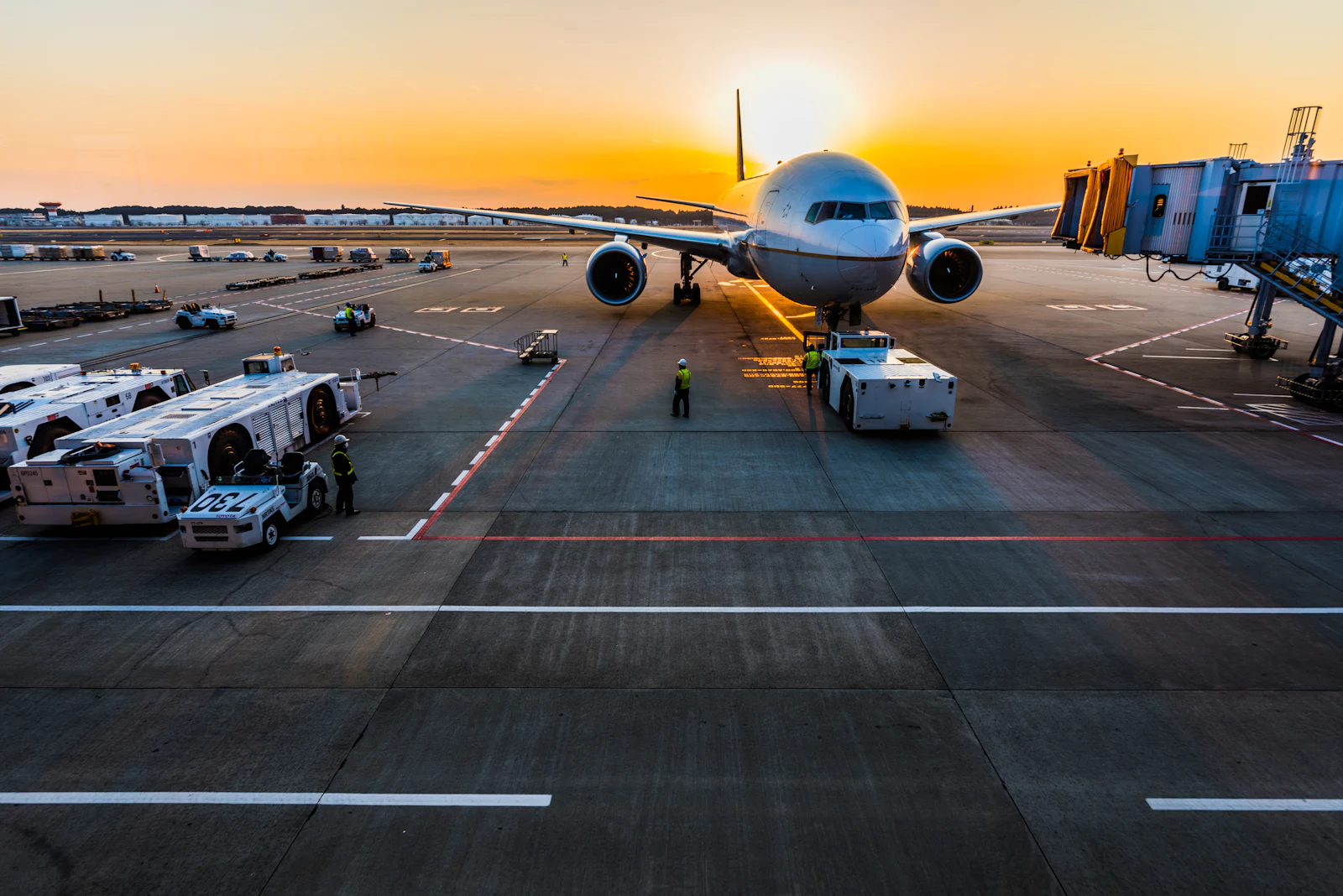
Ask which departure window performs worst and most people would guess the overnight one. It is dark, the crew has been up all night, and everything about it feels marginal.
The data says otherwise, once you look at the right flights. Nationally the 8pm–5am window ran 70.1% on time, ahead of the 68.0% evening window but well behind the morning. That national figure mixes true red-eyes with the last short hops of the day, which the last-flight guide separates.
On long eastbound routes the picture changes. Los Angeles to JFK departures after 8pm ran 79.8% on time, against 69.2% for the 11am to 2pm wave. Only the first morning wave, at 86.3%, did better.
I did not expect the overnight to beat the middle of the day that clearly.
Three structural advantages
Empty airspace. The volume that produces the 21% of national delay minutes charged to the National Aviation System is a daytime phenomenon. At two in the morning there is no arrival bank to sequence behind, no departure queue, and no flow control.
Nothing to inherit. Nationally 40% of delay minutes trace to an aircraft that arrived late from an earlier leg. An overnight departure is often the first leg of a new duty cycle rather than the fifth of an old one, which removes the largest single delay category from the equation.
No convection. Thunderstorms are an afternoon and evening phenomenon. Overnight flights depart after the atmosphere has settled and land before it has started again.
Where the advantage is largest
Long routes, and eastbound flying in particular. A five-hour overnight has all three advantages working at once, and its arrival slot is early morning when the destination airport is at its emptiest. The two directions of a route are separate records in the data, so the red-eye shows up only on the eastbound page. JFK to Los Angeles has departures after 8pm too, but they are late-evening westbound flights, not red-eyes, and they ran 65.8%.
The advantage is smallest on short routes, where there are few overnight departures anyway, and at airports with curfews or restricted night operations.
Check the hour-block chart on the specific route page rather than assuming. The overnight bar carries its own sample size, and on many routes it is thin enough that the percentage should be read with caution.
The honest costs
You will not sleep well. That is the whole trade and no statistic offsets it.
Recovery options are worse if it goes wrong. A cancelled overnight leaves you at an airport at midnight with no staffed desk and the next departure not until morning. The delay figures look good precisely because so little goes wrong; when something does, there is nothing behind it.
Ground transport at the destination is thin at six in the morning, and hotel check-in is hours away. Arriving reliably at an hour when you cannot do anything is a real cost that the on-time rate does not price.
Who should take one
Anyone whose priority is arriving on the day promised rather than arriving rested. A morning commitment on the far coast, a connection to an international departure, a trip where a missed day costs more than a bad night.
Anyone flying in convective season on a route whose afternoon window collapses. The overnight sidesteps the mechanism entirely.
Anyone who would otherwise take an evening departure: nationally the 5pm–8pm window is the weakest at 68.0% against 89.3% for the best. On a long eastbound route, if the choice is a late-afternoon flight or the red-eye, I would take the red-eye.
Who should not
Anyone connecting onward within a couple of hours of arrival, because you will be doing it tired and any delay lands at the worst possible hour for rebooking.
Anyone whose destination has no early ground transport, and anyone for whom the day after matters more than the day of.
The sample size caveat matters here
Overnight departures are a small share of most routes, and a percentage built on a few dozen flights moves around far more than one built on thousands.
This site shows the flight count behind every hour block for exactly this reason. On a route with two hundred overnight departures a year, the figure is worth reading. On one with thirty, it is barely evidence. Where a block falls below thirty flights the site shows a dash rather than a percentage, because a number computed from that little data would look authoritative and mean nothing.
So read the overnight bar together with its count. Where the count is thin, fall back on the structural argument above rather than the specific number: the mechanisms that make overnight flying reliable are real even where a particular route lacks the sample to demonstrate them.
What happens to the aircraft afterwards
Worth knowing if you are choosing between an overnight and an early morning on the same route.
An aircraft arriving at six in the morning off a red-eye typically turns and flies a full day. That means the red-eye's own reliability is high, but it also means the aircraft's next few flights are the ones carrying the inherited risk. If you are booking the 8am departure out of the arrival city, you may well be boarding the aircraft that just flew the overnight.
This is invisible on a booking page and it is one of the reasons the first departure of the morning at a spoke airport does not always perform like the first departure at a hub, where the aircraft genuinely spent the night parked.
One practical booking note. Overnight departures are frequently the cheapest seat on a long route, and the discount is not generosity: it is the market pricing the inconvenience. If the reliability advantage above matters to you more than the sleep, that is a rare case of the cheaper option also being the more dependable one.
How I choose between the red-eye and the first flight
These are the two strong windows and they win for different reasons, which decides between them.
The first flight of the morning is reliable because its aircraft spent the night at the gate and has nothing to inherit. That advantage is largest at a carrier's own hub, where aircraft genuinely overnight in numbers.
The overnight is reliable because it flies through an empty system. That advantage is largest on long routes, where the flight is long enough for the empty airspace to matter and where the daytime alternative would be absorbing a full day of accumulated delay.
So: short route out of a hub, take the first morning departure. Long route, especially eastbound, the overnight is the serious competitor. Each route page carries both bars with their sample sizes, which is the comparison worth making rather than applying either rule blindly.
Check the overnight bar on a route: Kennedy (JFK) · San Francisco (SFO) · Compare any US route