Guide
Do airlines run better at their own hubs?
Of 37 airports where one airline flies 30%+ of the departures, the airline beats its own network at 20 and trails at 17. American Airlines at Dallas-Fort Worth (DFW): 66.7% on time.

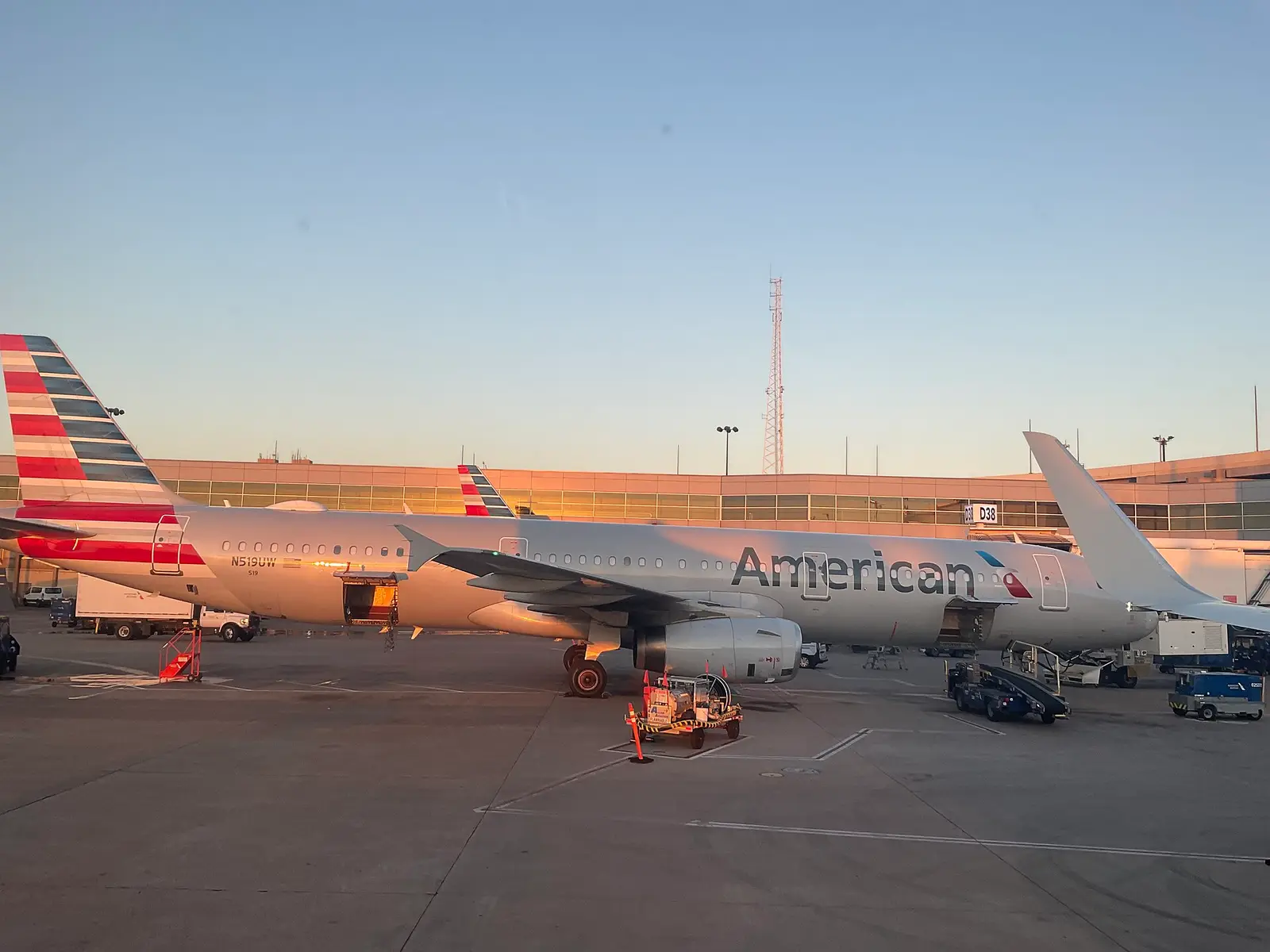
An airline's hub is where it has everything: the spare aircraft, the reserve crews, the maintenance hangars and most of its gates. I expected it to run its best operation there. Across the 37 cases where a single airline flies at least 30% of an airport's departures, the data says otherwise often enough to matter. The airline beat its own network average at 20 of them and trailed it at 17.
The extremes are far apart. Alaska Airlines at Anchorage (ANC) ran 86.4% on time against 79.7% for the airline as a whole, 6.7 points better. American Airlines at Dallas-Fort Worth (DFW) ran 66.7% against 74.7% across its network, 8.0 points worse.
How these figures are built: airport figures on this site cover flights departing the airport, scored on arrival at their destination, so "American at DFW" means American mainline flights leaving Dallas-Fort Worth. Regional partners such as Envoy, SkyWest and Republic report under their own names and are counted as separate carriers, which is why some large hubs, O'Hare among them, do not appear: no single mainline carrier flies 30% of the departures there. One regional never shows up at all. Endeavor Air, Delta's own subsidiary, does not appear as a separate carrier at Delta's hubs in this data.
The big three
At this airportAcross its whole network
60.0%90.0%
Airports where the airline flies at least 30% of all departures and 15,000 flights a year. On-time percentages. Source: US DOT Bureau of Transportation Statistics, September 2025 to August 2026.
Delta's pattern is the most consistent. Its network ran 81.1% on time, the best of the big three, and most of its hubs sit slightly below that figure, with Salt Lake City the exception. That is less of a verdict on the hubs than it looks. Delta's network average includes thousands of spoke flights that never touch a congested airport, and at Atlanta, Minneapolis and Detroit the hub itself is a large share of the network. The gaps at Delta's hubs are small.
Delta's hubs also code their delay differently: more of it under "air carrier" and less under "late-arriving aircraft" than the national split. I read that, together with the missing Endeavor, as a reporting convention rather than a finding about how Delta runs its operation, and I would not compare Delta's cause shares with another airline's.
United is mixed. It beats its network at Dulles, San Francisco and Houston Intercontinental, runs level at Denver and trails at Newark. San Francisco is the interesting one: the airport as a whole ran 75.3% on time, and United's own departures did better than that. At an airport where morning low cloud regularly cuts arrival capacity, the hub carrier with the spare aircraft and crews on site appears to recover faster than the visitors.
American is where the question gets its sharpest answer. Its network ran 74.7% on time. At Charlotte and Philadelphia it ran slightly better than that. At Dallas-Fort Worth, its largest hub by a distance, it ran 66.7%. The gap is also understated, because DFW is a large enough slice of American's flying to pull the network average down with it.
Why a hub can hurt
Three mechanisms work against the hub carrier, most of all at the largest hubs.
Banks. A connecting hub schedules its flights in waves: a burst of arrivals, 45 minutes to an hour for passengers and bags to move between them, then a burst of departures. At the peak of each bank the airport runs close to its runway and gate capacity, taxi queues build, and a departure that waits for a late inbound feeder to protect its connecting passengers starts the next leg behind.
Exposure. At its hub, an airline has a large share of its whole schedule under one sky. When a line of storms crosses North Texas on a June afternoon, it delays a large share of the airline's entire operation for that afternoon, and the aircraft and crews caught at DFW are the ones scheduled to fly everywhere else that evening. DFW's worst month in this period was June, at 63.6% on time.
Propagation. The DOT's cause codes show where DFW's delay comes from. Late-arriving aircraft account for 47% of its delay minutes and the airlines' own operations 31%, while the air traffic system accounts for only 14%. The runways are not the bottleneck. Turning aircraft around, crewing them and getting them away on time is.
Why a hub can help
The same concentration also gives the hub carrier the tools to fix a problem. A spare aircraft parked at the hub can replace a broken one in an hour; at an outstation the same failure can cancel the flight. Reserve crews sit at crew bases, which are mostly hubs. And the first wave of the day at a hub is made up of aircraft that spent the night there, with nothing inbound to wait for. Hub carriers that avoid heavy congestion and severe summer weather can turn those advantages into a better record than their network, which is what the top of the chart shows.
The hub carrier against everyone else at its hub
A second comparison is starker. At only 11 of the 37 did the dominant airline beat the airport's own average, which includes the dominant airline itself. At most hubs, the other carriers' departures ran better than the home team's.
DFW average 72.8%
60.0%90.0%
Carriers with at least 1,000 scheduled flights at DFW. The line is the airport average. Source: US DOT Bureau of Transportation Statistics, September 2025 to August 2026.
DFW shows it clearly. The airport averaged 72.8%. American mainline sat well below that, and Envoy, American's own regional subsidiary flying smaller jets under the American Eagle name from the same airport, ran far better. This is likely because visiting carriers at a hub mostly fly out and back to their own hubs, outside the dominant carrier's banks. The gap between American and Envoy at DFW is harder to explain: the two fly different aircraft to different destinations, and neither the cause codes nor the schedule can separate those effects.
Southwest, Alaska and JetBlue
At this airportAcross its whole network
60.0%85.0%
Airports where Southwest flies at least 30% of all departures and 15,000 flights a year. On-time percentages. Source: US DOT Bureau of Transportation Statistics, September 2025 to August 2026.
Southwest does not run hubs in the banked sense, but it dominates more airports than any other airline, and its bases split cleanly. Mid-sized California and Midwest airports, such as Burbank, Sacramento, San Jose and Kansas City, run ahead of Southwest's 75.7% network figure. The large bases in hotter, stormier or busier places, including Dallas Love Field, Orlando, Austin, Phoenix and San Diego, trail it. Chicago Midway sits close to the line. For Southwest, the base seems to matter less than the local weather and the traffic its aircraft fly through.
At this airportAcross its whole network
60.0%90.0%
Airports where the airline flies at least 30% of all departures and 15,000 flights a year. Source: US DOT Bureau of Transportation Statistics, September 2025 to August 2026.
Alaska does better than its network at Portland and worse at Seattle and Honolulu. JetBlue at Kennedy runs close to its network figure of 71.3%, which says as much about JetBlue's network as about Kennedy.
This is one year of data, and hub performance swings with a single bad summer. The structural pattern holds: the busiest, most weather-exposed hubs tend to trail, smaller and calmer ones tend to lead.
How I use this before booking
Pick a connecting hub by the airline's record there, not the airport's. The airline-at-airport pages give each carrier's own figures at each hub. Delta at Salt Lake City and American at Charlotte are different products from Delta at Detroit and American at Dallas-Fort Worth, even at the same fare.
If you must connect at a weak hub, connect early. The first bank is built from aircraft that overnighted at the hub. At 66.7% on time for American's DFW departures, I would not route an afternoon summer connection through Dallas-Fort Worth if a morning one exists.
Flying nonstop from a hub city, check the other carriers. At many hubs the visiting airlines' departures run better than the hub carrier's. On a nonstop, you get the punctuality without needing the connection network.
Remember what the hub does give you. When a flight at a hub is cancelled, there are more later departures to rebook onto. A delay at the hub is often easier to recover from than one at a spoke. The missed connection risk guide sets out how that plays against the delay figures.
Check your airline at your hub: American at DFW · Delta at ATL · United at DEN · Southwest at MDW · The big three compared